What are we aiming for?
We archieve our society's changes due to the COVID-19 pandemic as data, and preserve the data for future reference.
Value-neutral Digital Archiving
Archive social issues and changes arising from COVID-19 from an independent and neutral perspective
Pursuing a sustainable collaboration model
Online-oriented communication and cooperation in an untacted environment
Open Data First
Open and share all archived data and source code
What topics do we cover?
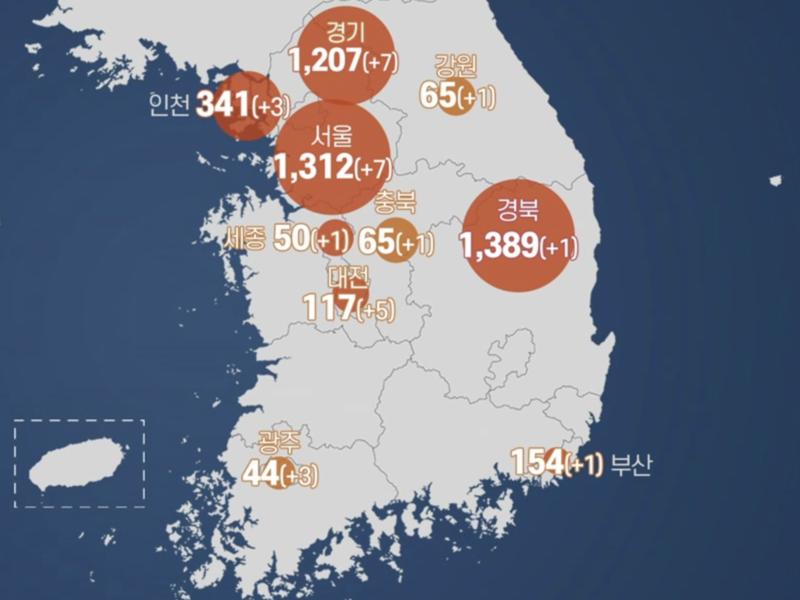
We analyze the current status of infection and spread of COVID-19, and record issues that have had a major impact on society or have led to changes in our daily lives.
Government Policy & Response
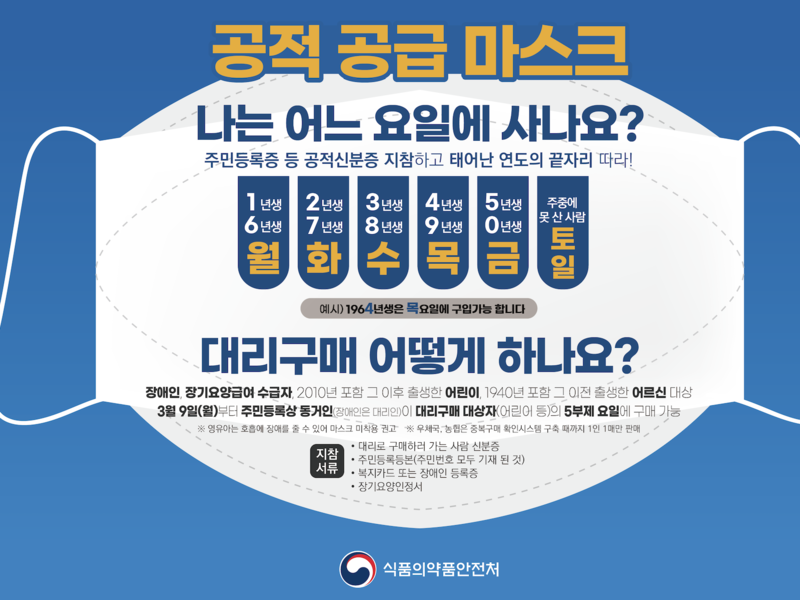
Government moves to prevent COVID-19 virus and spread of infection
Economics
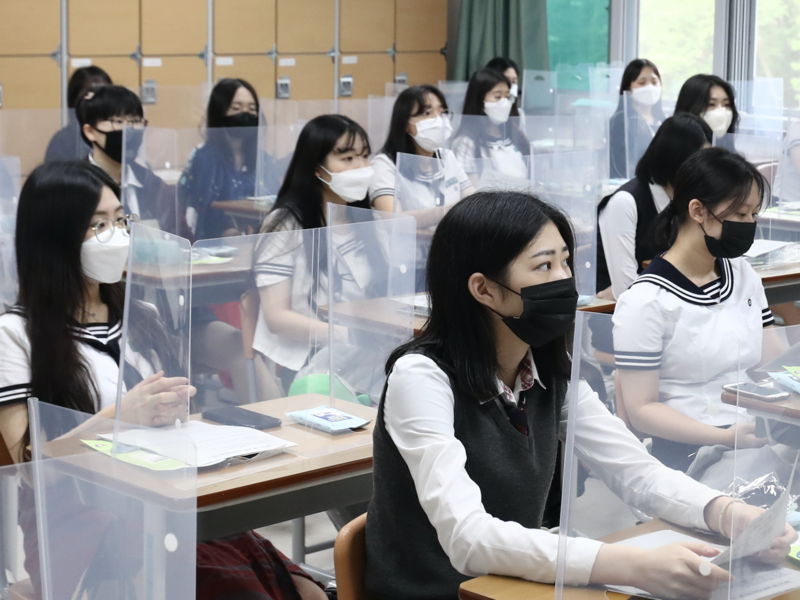
Changes in educational environment caused by COVID-19 and responses by major topics
Education
Current status of coordination of school classes with the expansion of COVID-19
Culture
Crisis in offline cultural industry (movie, tourism) and opportunity in zero-contact industry
Environment
Environmental Impact of COVID-19 and Green New Deal in Post Corona Era
What we offer?
All resources collected and built, including domestic and foreign data related to COVID-19, source codes for analysis and visualization, and government press releases, are disclosed and released under the CC-BY 2.0 KR license.
Portfolio
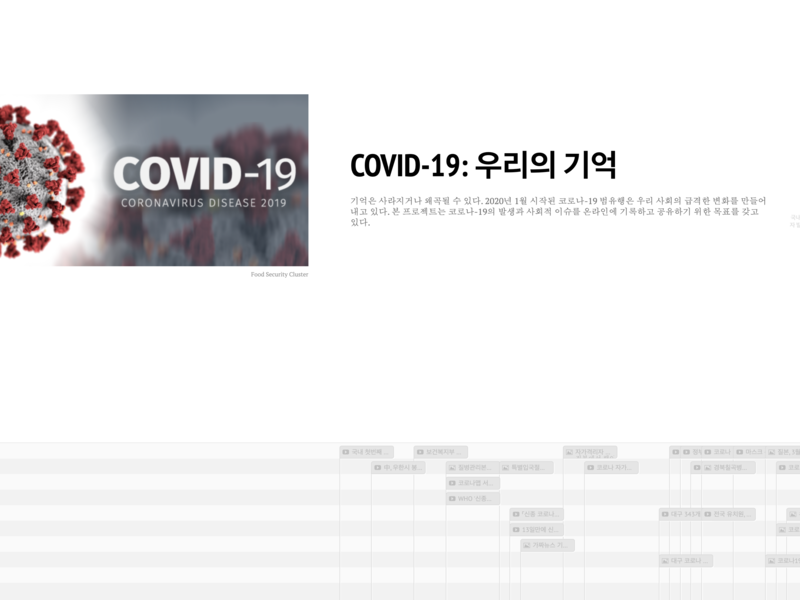
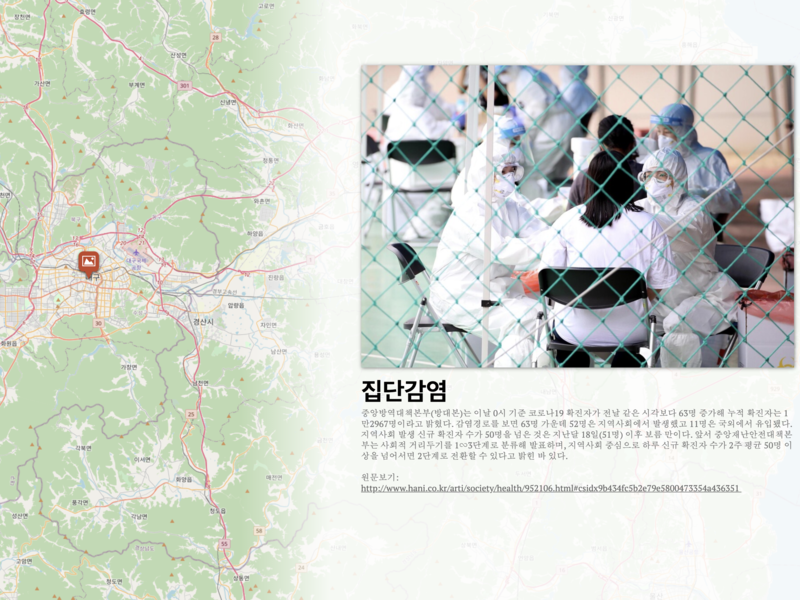
We share the collected data from various data sources and newly constructed data. It provides raw data collected from various websites, source code for data pre-processing and analysis, and visualization results.
- All
- Data
- Data Analysis
- Visualization
Members
Team. Cayley is made up of students from Chung-Ang University in Korea, majoring in Library and Information Science and COSADAMA.
The project - COVID-19: Our Memory is an attempt to solve social issues using social science, engineering perspectives, and collective intelligence.
The crisis is still ongoing. As much as we want to return to our daily lives, we need social efforts to continuously review issues and improvements around us.

Haklae Kim
Coordinator
We record the government's response to the COVID-19 crisis. It's up to you to use the recorded data, evaluate the government, and prepare for the future.

HyeonJi Kim | Juyeong Shin | Hayoung Sohn | Jieun Seon | Hyunseo Cho | Soui Baek
Subject: Government Policy
All phenomena are complex combinations of factors. There is still not enough data. If the data is diverse, can we interpret our society a little more diversely?
NamGyu Lee | Yoonjin Sin | Jung Chan
Subject: Economics
When data is gathered, it becomes information, and when information is gathered, it becomes knowledge. We want to make the data of education in the COVID-19 era into information and make it into the future knowledge.
Eunhye Choi | YoungKyu Kim | Giryeong Lee
Subject: Education
Since COVID-19, the cultural industry has been in crisis, and the zero-contact industry has an unexpected opportunity. How should cultural policies of the government respond to the social changes caused by COVID-19?

Hyemin Song | Minseok Gim
Subject: Culture
COVID-19 again proved harshly that disasters never come evenly. But we will not only prove inequality, but will continue to move toward solidarity.
Gayoon Kim | Haram Park | Chaeeun Song | Saetbyeol Leeyok | Haeyoung Lee
Subject: Society
The environment is important to everyone, but it is always overlooked. Now that we know our responsibility for the environment issues due to COVID-19, it is time to take action.

JeongYun Lee | JiEun An | GaIn Kim
Subject: Education
Contact Us
If you have any questions about COVID-19: Our Memory, please feel free to contact us.
Location
84 Heukseok-ro, Dongjak-gu, Seoul, Korea
Email:
team.cayley@gmail.com
Tel:
+2 2 820 5561